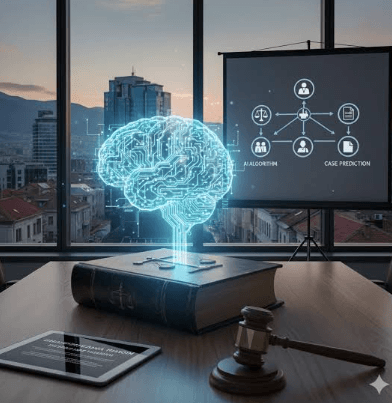

Artificial intelligence in case prediction analyzes structured and unstructured legal data to forecast outcomes such as rulings, durations, and settlement probabilities. The approach emphasizes transparency, data provenance, and reproducibility, while acknowledging coverage limits and the potential for bias. Evaluation rests on accuracy, fairness, and accountability, supported by independent validation and ongoing audits. The governance framework calls for privacy safeguards and clear separation from advocacy, inviting scrutiny of methodologies before deployment in legal workflows, and inviting further discussion.
What AI in Case Prediction Actually Does
AI in case prediction analyzes structured and unstructured legal data to forecast outcomes, such as rulings, durations, and settlement probabilities. It concentrates on case coverage without implying guaranteed results, testing hypotheses across jurisdictions. The approach emphasizes model transparency, enabling peer review and reproducibility, while separating prediction from advocacy. Findings support rigorous decision-making, interdisciplinary validation, and responsible deployment in legal workflows.
Data, Bias, and Privacy at the Core
Data quality and provenance drive the reliability of case-prediction models, yet biases embedded in training corpora, labeling practices, and historical decision records can propagate unjust or misleading outcomes.
Analyses emphasize transparent data governance, robust de-biasing methods, and cross-disciplinary validation.
The discussion foregrounds data bias and privacy risk, urging principled design that respects rights, accountability, and public trust in predictive justice.
Evaluating AI Outcomes in Legal Scenarios
Evaluating AI outcomes in legal scenarios requires systematic, evidence-based assessment across multiple dimensions, including accuracy, fairness, transparency, and accountability. The evaluation emphasizes data ethics and model governance as foundational constraints, ensuring independent validation, auditability, and responsible deployment. Interdisciplinary analysis integrates jurisprudence, statistics, and ethics to guide decision-making, safeguard rights, and promote trustworthy, verifiable performance without overclaiming predictive certainty.
See also: What Gives Bitcoin Its Value?
Building Ethical, Effective AI Case-Prediction Practice
What practical steps and governance structures are essential to ensure ethical, effective AI case-prediction in legal settings? The practice integrates peer-reviewed methodologies, continuous validation, and transparent documentation. It emphasizes privacy metrics, bias mitigation, and accountability through independent audits. Model governance ensures provenance, version control, and ongoing impact assessments, aligning technical performance with legal norms and societal values while preserving practitioner autonomy and reform-oriented freedom.
Frequently Asked Questions
How Accurate Are AI Case Predictions Across Different Jurisdictions?
AI case prediction accuracy varies; AI reliability is higher in standardized datasets but shows jurisdictional variance due to legal norms and data quality, necessitating rigorous, interdisciplinary evaluation and transparency for an audience seeking freedom and informed oversight.
Can AI Replace Human Judgment in Legal Decision-Making?
AI cannot fully replace human judgment in legal decision-making; it functions as a tool. Rigorous, interdisciplinary evaluation shows benefits with ai ethics and bias mitigation to support, not supplant, deliberation and accountability for free, informed citizen engagement.
What Safeguards Exist Against AI Misinterpretation of Facts?
“Look before you leap.” The answer: safeguards exist through rigorous safeguard design and bias auditing, combining interdisciplinary methods to prevent AI misinterpretation of facts; continuous evaluation, transparency, and independent review underpin resilience while respecting freedom-loving, evidence-based scrutiny.
Who Is Liable for Ai-Prediction Errors in Court?
Liability for AI-prediction errors in court remains unsettled, with accountability distributed among developers, deployers, and institutions; AI ethics and data provenance frameworks guide risk attribution, evidencing interdisciplinary scrutiny and emphasizing transparent governance for audiences seeking freedom.
How Can Users Verify Ai-Produced Case Insights Independently?
Independent verification is possible through reproducible methodologies, cross-validation, and audit trails; transparency standards require disclosure of data sources, model assumptions, and performance metrics, enabling rigorous, interdisciplinary assessment for audiences seeking freedom and accountability in AI-generated case insights.
Conclusion
In sum, AI-driven case prediction offers structured forecasts that can inform decision-making while guarding against complacent reliance. Rigorous evaluation, transparency about data provenance, and ongoing auditing are essential to reveal biases and limitations. Interdisciplinary collaboration—combining legal scholarship, data science, ethics, and governance—ensures responsible deployment aligned with privacy safeguards and accountability. At its core, this approach helps practitioners navigate uncertainty without promising certainty, and recognizes that results must be treated as guidance, not guarantees. It’s not a silver bullet, but a compass.